
B3OS Walkthrough
Automate Polymarket USDC Funding with Morpho and B3OS
Never miss a trade on Polymarket again. Discover how to build a B3OS workflow that automatically borrows USDC against your Morpho CBBTC position when your wallet balance dips.
Matched Template
Start with Morpho + Polymarket: Borrow to Place Bets.
This tutorial maps directly to a real B3OS template. Open it to inspect the workflow canvas, node sequence, and integration path before adapting it to your own process.
Managing liquidity across DeFi protocols often requires manual intervention, especially when trading on platforms like Polymarket. For users active on Base, maintaining a specific USDC balance is critical for seamless execution. B3OS provides a no-code infrastructure to automate this process, allowing you to bridge the gap between your lending positions on Morpho and your active trading wallet.
Watch the original B3OS video tutorial on YouTube.
What you will learn
- Use B3OS to automate USDC funding for Polymarket by borrowing against Morpho collateral.
- Define custom USDC balance thresholds to trigger automated borrowing workflows.
- Eliminate manual wallet monitoring to ensure continuous trading capability.
- Leverage B3OS no-code templates to connect Base ecosystem protocols seamlessly.
- Maintain control over your liquidity strategy through configurable target borrow amounts.
The Challenge of Manual Liquidity Management
Active traders frequently face the friction of monitoring wallet balances across different decentralized applications. When your USDC balance on Polymarket drops, you are forced to manually bridge assets or borrow against collateral, which can result in missed market opportunities.
Onchain automation shifts this burden from the user to a programmable workflow. By defining clear triggers—such as a specific balance threshold—you can ensure your trading capital remains topped up without needing to monitor your wallet 24/7.
Architecting the Morpho-to-Polymarket Workflow
The B3OS workflow for auto-funding relies on three core components: the trigger, the lending protocol interaction, and the destination wallet. In this scenario, the system monitors your Polymarket wallet's USDC balance.
Once the balance falls below your predefined minimum, B3OS initiates a request to the Morpho protocol. Using your CBBTC position as collateral, the workflow borrows the necessary USDC and moves it to your trading wallet, keeping your strategy active.
Setting Parameters for Onchain Automation
Successful automation requires precise configuration. Within the B3OS interface, you select the specific wallet you wish to monitor and establish your 'minimum balance' threshold.
You then define the 'target borrow' amount. This ensures that the workflow doesn't just replenish your funds, but maintains them at a level that supports your specific trading volume or risk tolerance.
Why Base Ecosystem Integrations Matter
B3OS is designed to work across the Base ecosystem, including protocols like Morpho, Aerodrome, and Clanker. Because these integrations are built natively into the B3OS platform, users can chain complex DeFi actions together without writing smart contracts.
This modular approach allows builders and operators to create sophisticated, repeatable workflows that react to real-time onchain events, effectively turning your wallet into an autonomous agent.
Workflow ideas to try in B3OS
- Collateralized Liquidity Top-upAutomatically borrow USDC against Morpho CBBTC positions when wallet balances drop below a set threshold.
- Automated Yield RebalancingMonitor yield rates across Base lending protocols and shift assets to the highest-performing market automatically.
- Onchain Alerting SystemReceive real-time notifications or trigger secondary actions when specific smart contract events occur on Base.
Frequently asked questions
Do I need to know how to code to use B3OS?
No, B3OS is a no-code onchain automation platform designed for builders and operators to create workflows through an intuitive interface.
Which networks does B3OS support?
B3OS is built to work across any chain, with deep native support for the Base ecosystem, including protocols like Morpho and Aerodrome.
Is my collateral safe during an automated borrow?
B3OS executes workflows based on the parameters you define. It is important to monitor your collateralization ratios within the lending protocol to ensure your positions remain healthy.
Related Templates
Start from a workflow instead of a blank canvas.

Coinbase Biz + Morpho: Rebalance for Max Yield
This is a workflow you can have running on a preset cadence where your Coinbase Biz balance will be monitored, if it exceeds the max amount set, excess funds will be auto-deposited into the best APY vault on Morpho.
Polymarket: BTC News Trader
Monitors a curated list of top crypto Twitter/X accounts for breaking BTC news, uses an AI model to classify each tweet as bullish/bearish with a confidence score, then auto-bets on the next Polymarket "Bitcoin Up or Down" market when the AI is confident enough.
Polymarket: Copy Trade a User
This workflow allows you copy trade any Polymarket user without needing a Polymarket account.
Automated Stop-Loss Manager for Polymarket
Periodically checks market positions and automatically closes any assets that fall below a predefined price threshold.

Wallet: Privately Fund a New Wallet with Anonymous ETH
Funds a fresh wallet with gas in ETH) on any chain (default:Base) without leaving an onchain link back to your source wallet.
Morpho: LTV Alerts + Repay
Watches every Morpho Blue borrow position you have on the chosen chain.
Trading: Recurring Cross-Chain Swaps to Any Wallet
Swaps tokens across chains on a schedule you set.
Polymarket: AI Bets When It Disagrees with the Market
Trades US-based policy events based on AI forecasts.

Talk to one of our founders.
Bring any onchain process you want automated, our founders will help map where B3OS can take over.
Related Tutorials
Keep building from the next walkthrough.
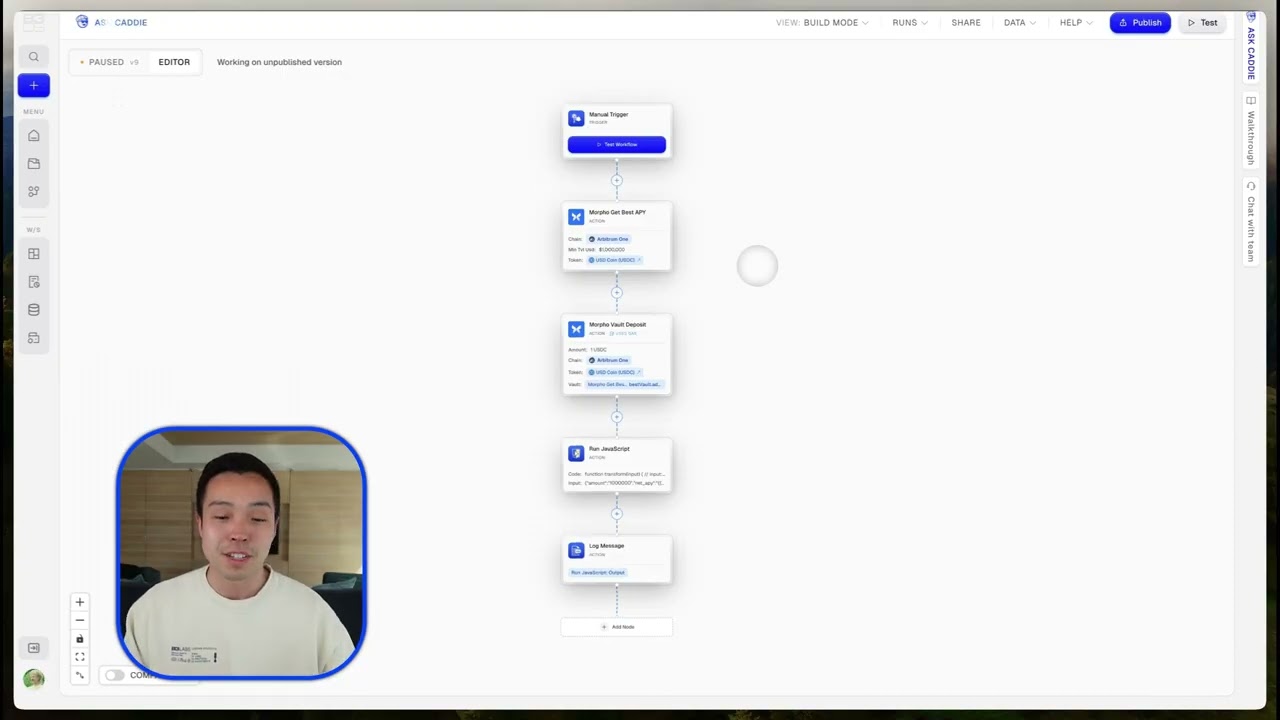
Automating DeFi Yield: How to Auto-Deposit USDC into Morpho Vaults
Streamline your DeFi strategy by automating USDC deposits into Morpho vaults. Discover how B3OS, ZeroDev, and Arbitrum integrate to manage your yield-seeking workflows.
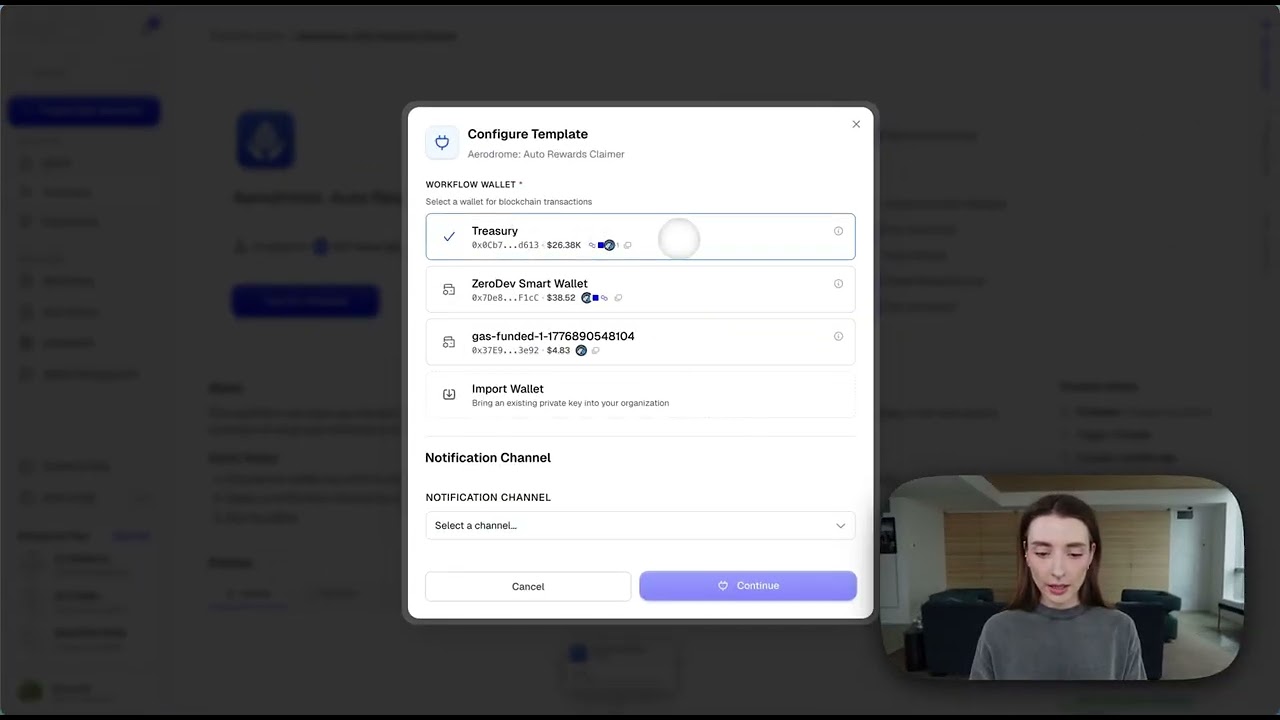
Automating Aerodrome LP Rewards with B3OS
Stop missing out on your Aerodrome emissions and rebases. Learn how to use B3OS to build an evergreen workflow that claims your LP rewards on a schedule you control.

How to Automate Dust Token Sweeping with B3OS
Tired of small, illiquid tokens cluttering your wallet? Discover how to build a recurring onchain workflow in B3OS to sweep dust tokens into USDC automatically.