
B3OS Walkthrough
How to Build Real-Time Compliance Monitoring for Smart Contracts
Protect your onchain operations by automating compliance monitoring. Learn how to use B3OS to track sanctioned address interactions and log events to Google Sheets in real time.
Matched Template
Start with Compliance: Sanctions + Illicit Finance Monitoring.
This tutorial maps directly to a real B3OS template. Open it to inspect the workflow canvas, node sequence, and integration path before adapting it to your own process.
As enterprises bring more activity onchain, the need for robust, automated compliance infrastructure becomes critical. Monitoring smart contract interactions for illicit finance or sanctioned addresses is no longer a manual task. With B3OS, teams can deploy automated workflows that scan every block, flag risky transactions, and maintain an audit trail without writing custom backend code.
Watch the original B3OS video tutorial on YouTube.
What you will learn
- Automate real-time monitoring of smart contract interactions to detect sanctioned address activity.
- Use whitelisting to exclude internal team wallets from compliance flags.
- Combine pre-populated OFAC lists with custom internal blocklists for comprehensive coverage.
- Streamline audit processes by automatically logging flagged events to Google Sheets.
- Deploy workflows that scan every block for immediate risk detection.
The Necessity of Automated Compliance
Manual monitoring of smart contract activity is prone to human error and latency. For teams operating on chains like Arbitrum, real-time visibility into who is interacting with your contracts is a baseline requirement for institutional-grade security.
B3OS provides a framework to integrate compliance checks directly into your onchain operations, ensuring that interactions with sanctioned addresses are flagged the moment they occur.
Configuring Your Monitoring Environment
To get started, select the compliance monitoring template within B3OS. This allows you to specify the target chain and the specific smart contract you wish to monitor, such as a master contract or liquidity pool.
By defining your scope early, you ensure that the workflow remains performant and focused only on the events that matter to your compliance team.
Filtering and Whitelisting
A common challenge in compliance monitoring is 'noise' generated by internal testing. B3OS allows you to whitelist specific team wallets, ensuring that internal development and QA activities do not trigger false positive compliance flags.
In addition to standard OFAC lists, you can integrate your own internal blocklists. The workflow evaluates these lists concurrently, providing a multi-layered approach to risk management.
Automating Audit Trails with Google Sheets
Transparency requires documentation. B3OS can automatically push flagged events directly into a Google Sheet. Each entry captures critical data points, including the risk category, the transaction hash, the flagged address, and a precise timestamp.
This automated logging creates a ready-to-review audit trail, enabling compliance officers to act quickly when a flagged transaction is identified.
Deploying the Workflow
Once configured, the workflow monitors every block in real time. Whether a user is swapping tokens, providing liquidity, or claiming rewards, the B3OS engine scans the interaction against your defined risk parameters.
Publishing the workflow activates the continuous monitoring loop, moving your compliance strategy from reactive manual reviews to proactive, automated oversight.
Workflow ideas to try in B3OS
- Automated Incident ResponseTrigger a Slack or email notification to your security team the moment a high-risk address interacts with your contract.
- Dynamic Access ControlUse B3OS to automatically update an onchain allowlist or blocklist based on the output of your compliance monitoring workflow.
- Operational ReportingAggregate daily summaries of flagged interactions in your Google Sheet and send a digest to your compliance department at the end of each business day.
Frequently asked questions
Can I monitor multiple contracts at once?
Yes, B3OS allows you to configure workflows to monitor specific contracts on your chosen chain, and you can deploy multiple workflows to cover different assets.
Does this workflow work on all chains?
B3OS is designed to support various chains. You can select your target chain within the B3OS interface when setting up your monitoring template.
How do I handle false positives?
You can use the whitelisting feature in B3OS to ensure that known, safe addresses or internal development wallets are ignored by your compliance filters.
Related Templates
Start from a workflow instead of a blank canvas.
Polymarket: BTC News Trader
Monitors a curated list of top crypto Twitter/X accounts for breaking BTC news, uses an AI model to classify each tweet as bullish/bearish with a confidence score, then auto-bets on the next Polymarket "Bitcoin Up or Down" market when the AI is confident enough.
Polymarket: Copy Trade a User
This workflow allows you copy trade any Polymarket user without needing a Polymarket account.
Global Market Sentiment Auto-Trade
Monitors a Twitter/X account and uses AI to decide whether to swap based on market sentiment.
Twitter: Keyword Sentiment Alert
Monitors Twitter/X for tweets matching your configured keywords, then uses AI to filter each tweet by sentiment.
Daily Portfolio Sentiment Recap
This workflow monitors the assets in your wallet, identified the top-performing tokens and then scans Twitter for any breaking/interesting news regarding those tokens.
Payments: Bulk Pay Crypto to a List of Wallets
This workflow runs payment from a Google Sheet.
Automated Stop-Loss Manager for Polymarket
Periodically checks market positions and automatically closes any assets that fall below a predefined price threshold.
Hyperliquid: Smart Position Alert
Monitor whales on Hyperliquid and catch the market-moving trades.

Talk to one of our founders.
Bring any onchain process you want automated, our founders will help map where B3OS can take over.
Related Tutorials
Keep building from the next walkthrough.
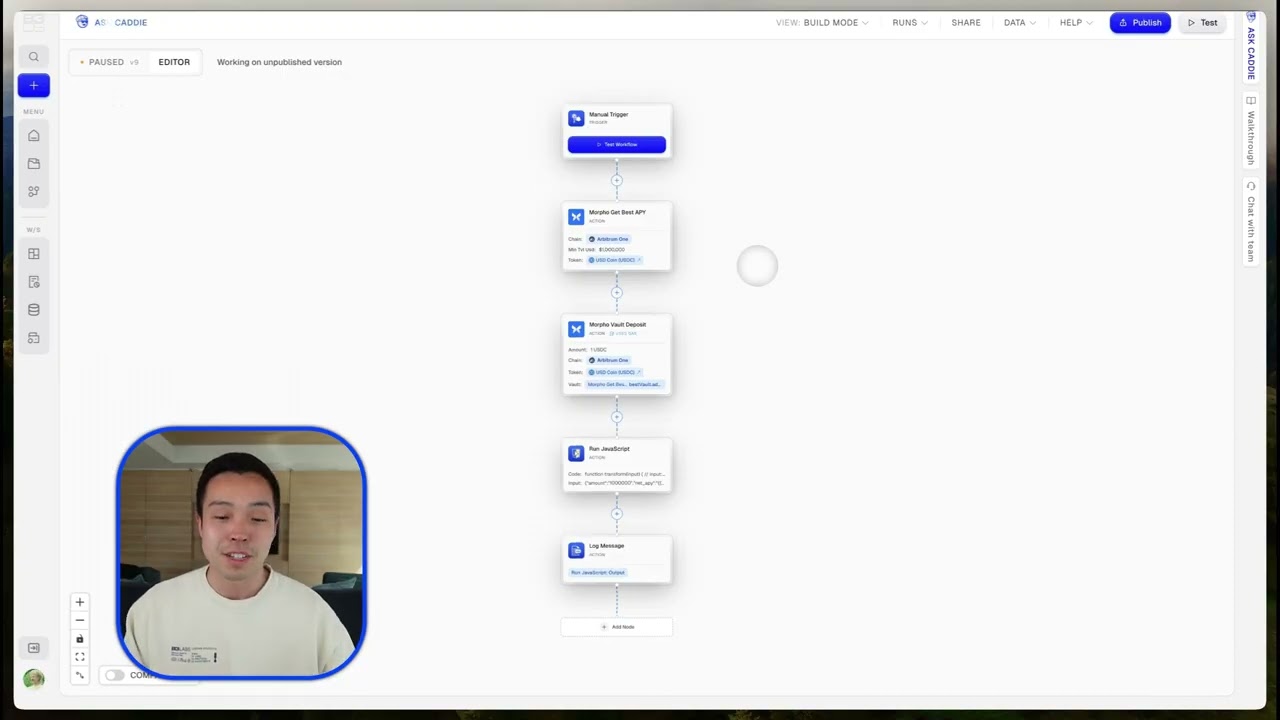
Automating DeFi Yield: How to Auto-Deposit USDC into Morpho Vaults
Streamline your DeFi strategy by automating USDC deposits into Morpho vaults. Discover how B3OS, ZeroDev, and Arbitrum integrate to manage your yield-seeking workflows.
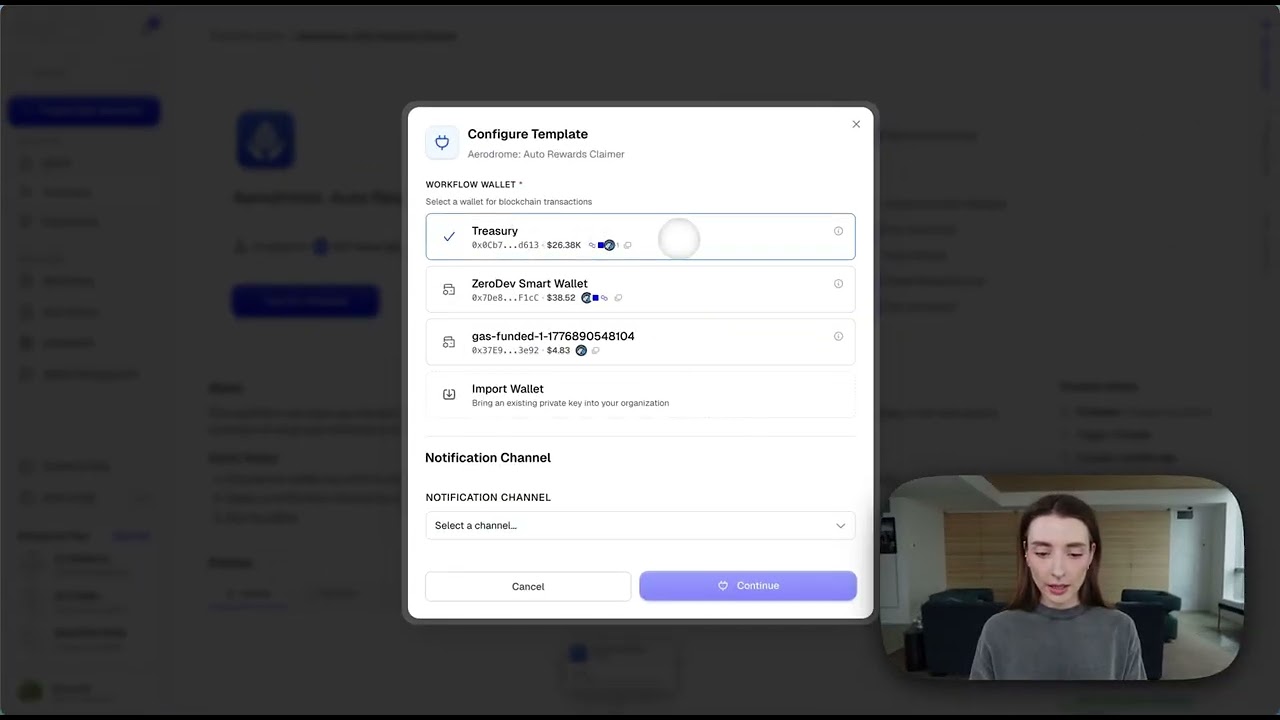
Automating Aerodrome LP Rewards with B3OS
Stop missing out on your Aerodrome emissions and rebases. Learn how to use B3OS to build an evergreen workflow that claims your LP rewards on a schedule you control.
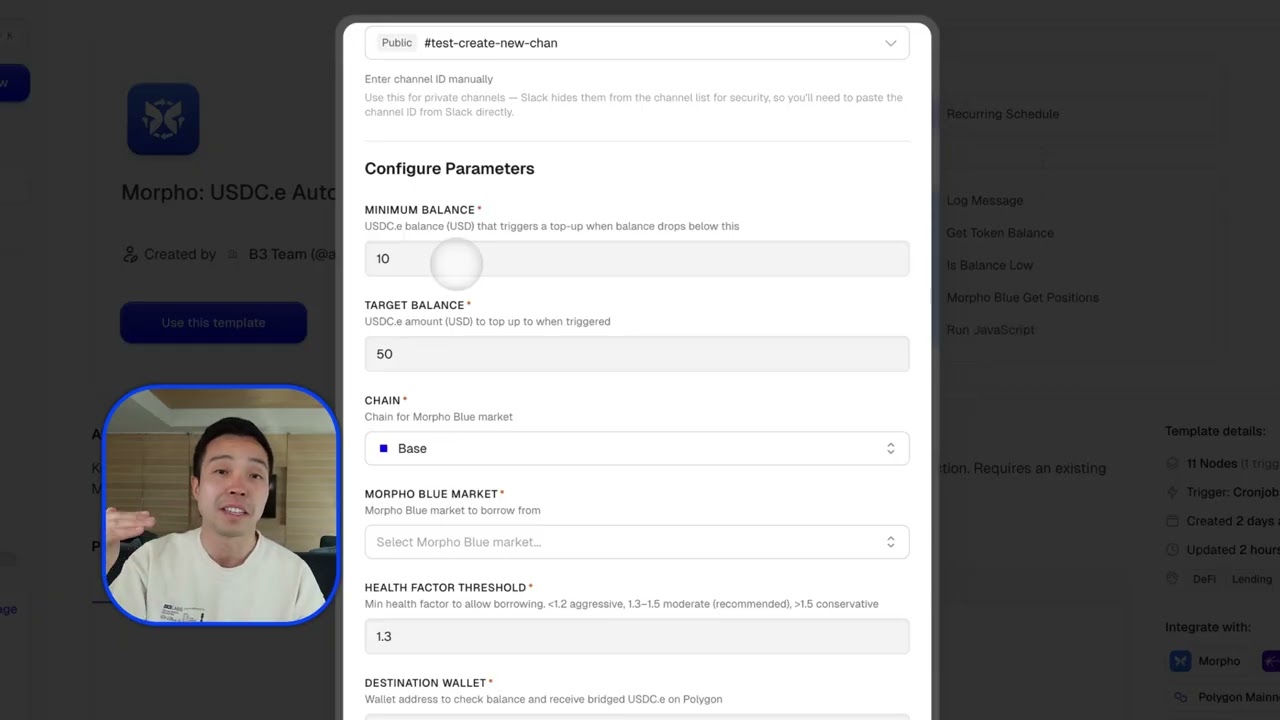
Automate Polymarket USDC Funding with Morpho and B3OS
Never miss a trade on Polymarket again. Discover how to build a B3OS workflow that automatically borrows USDC against your Morpho CBBTC position when your wallet balance dips.