
B3OS Walkthrough
How to Build a Morpho Auto-Rebalancer with B3OS
Discover how to automate your DeFi yield strategy on Morpho using B3OS. Learn how the Caddie agent translates natural language prompts into live, onchain rebalancing workflows.
Matched Template
Start with Coinbase Biz + Morpho: Rebalance for Max Yield.
This tutorial maps directly to a real B3OS template. Open it to inspect the workflow canvas, node sequence, and integration path before adapting it to your own process.
Managing yield across DeFi protocols often requires constant monitoring and manual execution. For builders and liquidity providers, the ability to automate these repetitive tasks is essential for maintaining optimal capital efficiency. With B3OS, you can translate complex DeFi strategies into live, onchain workflows using natural language prompts, bypassing the need for manual contract interactions.
Watch the original B3OS video tutorial on YouTube.
What you will learn
- Use natural language prompts to define complex DeFi strategies.
- Incorporate conditional logic to optimize gas usage and avoid unnecessary rebalances.
- Integrate notification channels like Telegram to maintain visibility over automated tasks.
- B3OS abstracts the complexity of wallet management and contract interaction.
- Rapidly deploy and iterate on onchain workflows without writing custom code.
The Power of Prompt-Based Automation
B3OS introduces a new way to interact with onchain protocols through Caddie, an AI-driven agent designed to interpret complex operational requirements. Instead of writing custom scripts or managing individual wallet transactions, you can describe your desired outcome—such as rebalancing USDC on Morpho—and let the system map out the necessary steps.
This approach allows operators to define specific conditions, such as frequency or yield thresholds, ensuring that the automation only executes when it aligns with your predefined strategy.
Defining Your Rebalancing Logic
Effective automation relies on clear logic. When building a rebalancer, you must define the triggers and the constraints. For a Morpho-based strategy, this includes identifying the source of funds, the target vaults, and the conditions under which a rebalance should occur.
By integrating conditional logic—such as skipping a rebalance if the APY spread remains below a certain threshold—you avoid unnecessary transaction costs and gas fees, keeping your operational overhead low.
Adding Operational Visibility
Automation is not just about execution; it is about visibility. A robust workflow should keep you informed without requiring you to check your dashboard constantly. By incorporating notification triggers, such as Telegram alerts, you can receive real-time updates whenever a rebalance occurs or when your strategy reaches a critical milestone.
This transparency ensures that you remain in control of your onchain assets while the B3OS platform handles the execution in the background.
Moving from Prompt to Onchain Execution
Once the workflow logic is confirmed, the transition to live execution is seamless. B3OS handles the underlying complexity of wallet signatures and contract interactions, allowing you to deploy your strategy to the chain in seconds.
This rapid deployment cycle enables teams to test, iterate, and scale their DeFi operations without the traditional friction of smart contract development.
Workflow ideas to try in B3OS
- Yield Aggregator RebalancerAutomatically move USDC between Morpho vaults based on real-time APY fluctuations.
- Automated Treasury ManagementTrigger stablecoin swaps or deposits when treasury balances exceed a specific threshold.
- Protocol Alerting SystemMonitor smart contract events and receive instant notifications for significant liquidity movements.
Frequently asked questions
What is B3OS?
B3OS is an onchain operating system designed to turn manual wallet flows and smart contract interactions into repeatable, automated workflows.
Do I need to know how to code to use B3OS?
No, B3OS allows you to build sophisticated workflows using natural language prompts interpreted by the Caddie agent.
Can I set custom conditions for my workflows?
Yes, you can define specific triggers, conditional logic, and notification preferences to ensure your workflows execute exactly as intended.
Related Templates
Start from a workflow instead of a blank canvas.
Morpho: Auto-rotate into Highest-Yielding Vault
Rotates your token across Morpho vaults and moves to the highest-yielding one.

Wallet: Privately Fund a New Wallet with Anonymous ETH
Funds a fresh wallet with gas in ETH) on any chain (default:Base) without leaving an onchain link back to your source wallet.


Morpho + Polymarket: Borrow to Place Bets
Monitors your wallet's USDC.
Morpho: LTV Alerts + Repay
Watches every Morpho Blue borrow position you have on the chosen chain.
Morpho: Vault Rebalancer
Weekly check: if a Morpho USDC vault on Base offers better APY than your current vault (configurable threshold), automatically withdraws and redeposits into the better one.
Plume: Looped pUSD Yield via Nest + Morpho
This workflow builds a leveraged pUSD yield position on Plume by looping deposits between Nest and Morpho.
Automated Stop-Loss Manager for Polymarket
Periodically checks market positions and automatically closes any assets that fall below a predefined price threshold.
Trading: Recurring Cross-Chain Swaps to Any Wallet
Swaps tokens across chains on a schedule you set.

Talk to one of our founders.
Bring any onchain process you want automated, our founders will help map where B3OS can take over.
Related Tutorials
Keep building from the next walkthrough.
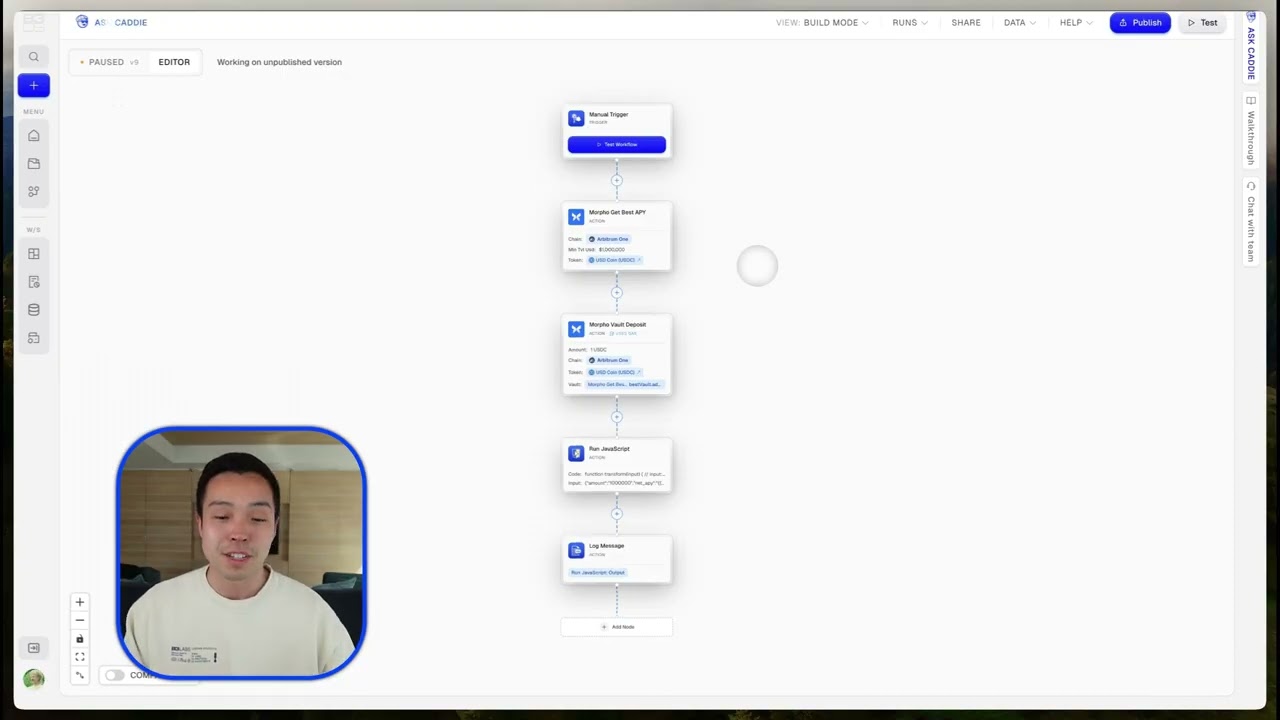
Automating DeFi Yield: How to Auto-Deposit USDC into Morpho Vaults
Streamline your DeFi strategy by automating USDC deposits into Morpho vaults. Discover how B3OS, ZeroDev, and Arbitrum integrate to manage your yield-seeking workflows.
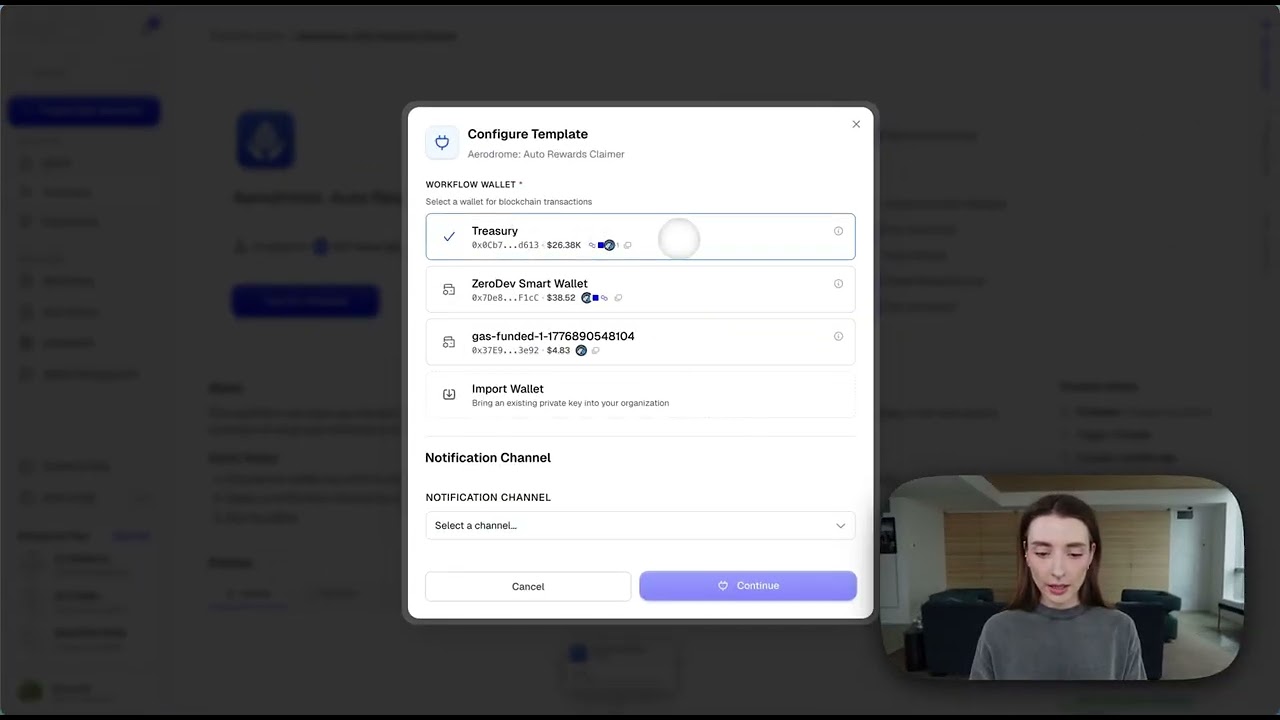
Automating Aerodrome LP Rewards with B3OS
Stop missing out on your Aerodrome emissions and rebases. Learn how to use B3OS to build an evergreen workflow that claims your LP rewards on a schedule you control.
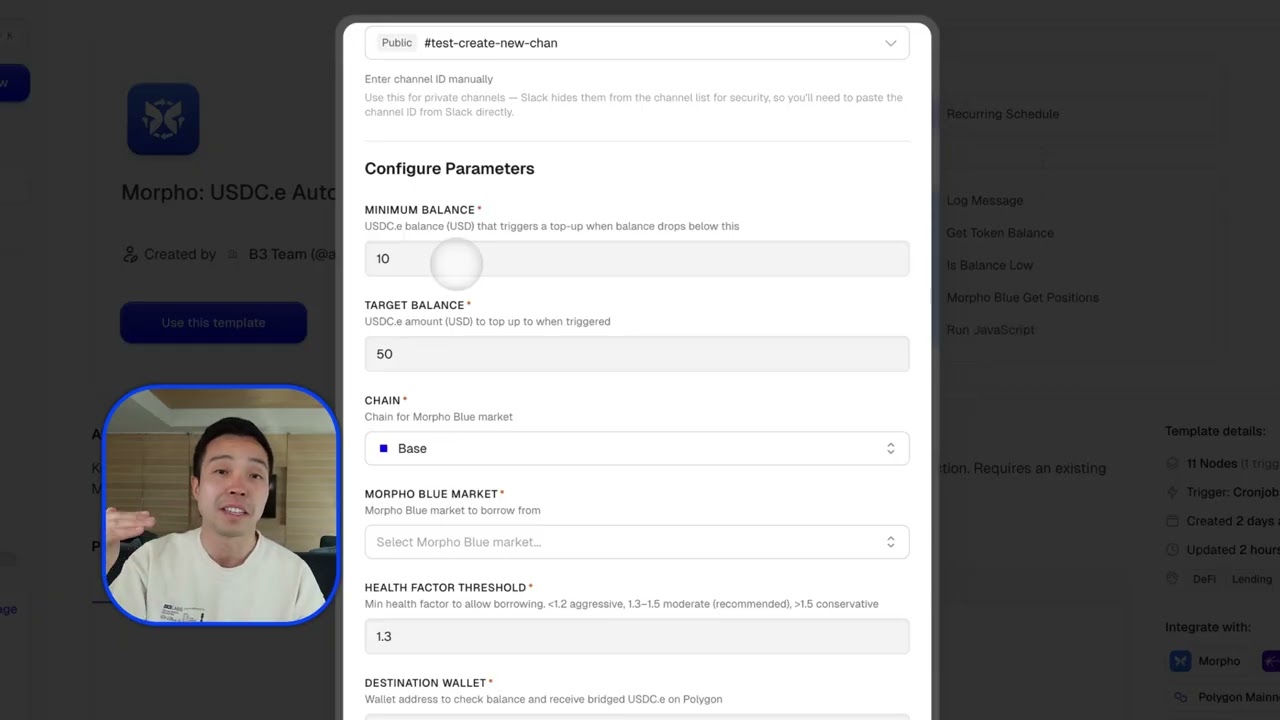
Automate Polymarket USDC Funding with Morpho and B3OS
Never miss a trade on Polymarket again. Discover how to build a B3OS workflow that automatically borrows USDC against your Morpho CBBTC position when your wallet balance dips.